Gaslighting Communities: Pathways to Injustice
May 2021
-
There are many techniques and behaviours the either end up or intentionally gaslighting communities about the health and environmental justices they experience. In this essay we explore these techniques and their illegitimate basis.
-
The idea of race was created as a mental vehicle that supports the dominance of White Supremacy. It has been used to create biologically non-existent differentiators between people to justify why some people are designated to be oppressed and why others are designated to profit from that oppression.
Racialisation is the process and enactment of racism, which is a key factor in both health and environmental injustice.
As a society, we have grown to expect that those who are racialised as Black will always/should always be resilient when facing acute and violent acts of structural racism.
The overvaluation of quantitative data, and devaluing of qualitative data lies in part due to our relationship and perception of data. Data is not independent from the human psyche. It is us who chooses what is mined, how it is mined, and crucially how it is interpreted. The over-reliance on quantitative data to support health policy action points to a deeper ontological problem as to how health is currently viewed and treated.
Tokenised and performative actions create a distraction from providing marginalised communities with financial structures, tools, and decision-making power that can enact actual structural changes.
Community is at the core of justice movements, we cannot create justice alone. Communities create an environment where knowledge, tools, and evidence can gather and disseminate quickly and effectively. They also offer psychological support as the road to justice is long and at times exhausting. Unfortunately, due to knowledge supremacy, their voices and efforts are often ignored.
INTRODUCTION
Inequity refers to systematic, avoidable, and unjust differences between different racialised and classed social groups within a population (source).
Health inequity refers to the systemic, avoidable, and unjust differences in health outcomes between different racialised and classed social groups.
Environmental inequity is the systemic, avoidable, and unjust distribution of ecologically healthy environments (those that are free from pollutants, have high biodiversity, and have a healthy microbiome). It also refers to land being unjustly stolen, polluted, or damaged.
When it comes to health and environmental inequity, social groups who are racialised or classified as a Black or Indigenous, overwhelmingly bear the brunt of environmental inequity and health inequity all over the Earth. The end result is the disproportionate experience of biological inequity and poor health outcomes. Despite this injustice, they have laid the foundations for mass movements in these domains for decades.
Worldwide, the areas that contain the highest levels of biodiversity are within Indigenous protected lands ensuring all of our survival (source), the Indigenous Peoples living on the Sahel are leading the way in environment restoration to help mitigate climate change (source), the father of the environmental justice movement is Professor Robert Bullard, a racialised Black man who mapped the environmental racism being experienced by many racialised Black communities in the Southern United States.
More recently, we have witnessed community driven actions such as Standing Rock, Tren Maya, and Southall. Yet, despite, the knowledges, scholarships, and evidence of experience within these communities, they are more often than not ignored, diminished, and gaslit. Their intellect is seen as inferior to “expert’ science, which delays the efforts of justice.
Crucially, for those who are marginalised, our work provides justice to even those who attempt to oppress, dismiss, or erase us. When we ask for clean or it is for all People including those who poison it.
In this essay, we will be detailing the pathways of oppression, including the role that science, policy, and city organisers play.
TERMINOLOGY
RACISM
In the fight for health justice, it is imperative that we all build up an accurate lexicon which allows us to communicate the phenomena that are imposed on us. When defining racism, social scientist David R. Williams defines it as follows:
“Racism is an organized societal system, in which the dominant racial group, based on a hierarchy of human value, categorizes and ranks people into social groups called ‘races’, and uses its power to devalue, disempower, and differentially allocate societal resources and opportunities to groups defined as inferior. As a structured system, racism interacts with other social institutions, such as the political, legal, and economic institutions, shaping the values, policies and practices within these institutions and being re-shaped by them. By creating unequal access to resources and opportunity, racism is a fundamental cause of racial inequities in health.”
There are four conceptualisations to take away:
The idea of race was created as a mental vehicle that supports the dominance of White Supremacy. It has been used to create biologically non-existent differentiators between people to justify why some people are designated to be oppressed and why others are designated to profit from that oppression (source). It does mean that our identification as Black or Indigenous or any other race is a construct of White Supremacy. Therefore, for this report, we will use these “race” categorisations to explain the phenomena of racism, not as definitive or personal identifiers.
Racism is a deliberate system acting in a dynamic manner with other societal systems e.g. housing, education, labour, criminal justice, that needs to be upheld, fed, and updated for its survival and continuity. Racism will always want to survive, as it is profitable. Therefore, we have to constantly update our education on the different tactics it uses to continue.
We have to learn how to dismantle the system, work away from the system, and challenge the system. This is a process that takes constant work and education.
We must also consider there are other extensions of “race” that are used to discriminate people gender, sex, sexuality, and class. All of which are concepts that are firmly based in Western conceptualisations. They are not universal.
RACIALISATION
We must work together to decolonise our language, in this report we are moving from the use of the word “race” as it is an illegitimate concept to “racialisation”.
Racialisation is the process and enactment of racism, which is a key factor in both health and environmental injustice.
When conducting studies or observing the phenomenon of racialisation in the context of health and environment injustice, we at times use the categorisations BIPOC (Black, Indigenous, People of Colour) and BAME (Black, Asian, Minority, Ethnic). This is to conduct surveys and to understand distributions. However, they miss the nuances of the different lived experiences within different communities and Peoples within the same racialised group. This is important when looking at health outcomes. A person categorised as Indigenous American raised on a particular reservation will face one set of stressors than those living in cities. We suggest the following.
When looking at data we can look at BIPOC and BAME, however, we must recognise the limitations of these terms and include lived experience of various communities and individuals.
When writing about marginalised populations, we must be specific about their racialisation in the context of their particular stressors, experiences, and habitat, which contribute to their health outcomes.
Use the word racialisation instead of race, as race is not a legitimate concept. To be clear race doesn’t exist but racism and its consequences do.
Be specific about how racism contributes to the health and environmental injustice experienced by a marginalised social group.
CLASS
Another factor used to discriminate and oppress people is through the creation of class. The 1800’s and well into the 1900’s marked a period where eugenics took off as a popular science, it proclaimed to be interested in creating opportunities to raise the proportion of people who are “well born” through their inaccurate (now debunked) understanding of heredity (source).
It was a line of thinking rooted in “rationalisations of inequity” (source). These rationalisations led to a societal thinking that biology played a role in poverty through bad genes rather than systemic class inequity (source). In short if a person had a good class standing it was due to having better genes. In turn this has created a delay in ending poverty and to this day people who experience poverty are villainised and marginalised.
It is important to note that classism and racism intersect, therefore, more accurate terms when referencing class is the “multi-ethnic working class” or those “systematically economically oppressed”.
COMMUNITIES
Community is at the core of justice movements, we cannot create justice alone. Communities create an environment where knowledge, tools, and evidence can gather and disseminate quickly and effectively. They also offer psychological support as the road to justice is long and at times exhausting (source). Unfortunately, due to knowledge supremacy, their voices and efforts are often ignored.
Knowledge supremacy refers to the acceptance, recognition, legitimation of concepts, definitions, ideas, and framings of a selective few knowledge pools, usually from Western institutions. This results in many other knowledges being erased, ignored, and diminished. Yet, those who are at the forefront of injustice have nuanced and valuable expertise that is necessary in creating healthier communities and habitats.
Knowledge Supremacy is a term identified by Centric Lab to define a knowledge pool that self-identifies as supreme to systematically dictate the knowledges that are valuable, trusted, and acknowledged, resulting in hegemonic policies that affect our health.

GASLIGHTING COMMUNITIES
The following are the various ways that communities are stifled, gaslit, and marginalised as they seek justice. It is important that those who are on the practitioner's side learn to identify them, so we are not unintentionally enacting injustice on a community.
-
As a society, we have grown to expect that those who are racialised as Black will always/should always be resilient when facing acute and violent acts of structural racism.
In short we expect “Black suffering” to happen and we expect them to be “ok” or to “find a way out”. This expectation is toxic and detrimental to the health of those racialised as Black (1).
Additionally, some in society have become emotionally desensitised to their suffering. In fact, evidence points towards a gap in empathy for those who are racialised as Black, which, in turn, can influence decision-making and behaviours when it comes to addressing racists policy practices or other systemic decision-making. This results in gaslighting of these communities and extending the injustice.
-
The process and road to justice is unnecessarily and systemically arduous and long. The story of Rosamund Adoo-Kissi Debrah is an example of this.
She was forced to endure 12 years of investigation and the autopsy of her young daughter, Ella, to prove that Ella’s death was caused by air pollution (2). All this despite over 30 years of epidemiological data strongly evidencing the link between air pollution and human mortality (3, 4). In addition, research has also pointed out that racialised Black peoples are disproportionately exposed to high levels of air pollution (5).
Whilst, in the end, Rosamund, who is a racialised Black woman and mother, won this landmark legal case, the question is: Why did it take so long? Why did we have to wait until a Black child died to see change? Why was historical research not enough? Was there an absolute need for an emotionally arduous autopsy process necessary evidence? Does the process of justice have to take this long or is it part of the oppressive modus operandi?
-
The erasure of those who are racialised as Black and/or Indigenous comes in two parts.
Their efforts, expertise, contributions and movements are often completely erased or silenced (6, 7, 8). This is done to the extent that many policy makers, scientists, and NGO’s spend time and money looking to “engage” these communities with health and environmental justice movements, despite their long standing leadership and continual first adoptions. For example, Citizens Advice had a training manual that included a slide called “Barriers to working with BAME communities'', which included deeply concerning racist stereotypes about communities of colour, reducing diverse groups to generalisations about ‘low levels of literacy’ and ‘intrinsically cash-centred cultures’ (9).
Their expertise is ignored and is not validated by established predominantly white led platforms; conferences, studies, forums, and boardrooms (10, 11).
-
Bureaucracy
Looking back at past examples, one can see that healthy policy mechanisms have evolved little since the 20th century.
Asbestos, which has been causally linked to mesothelioma and lung cancer and is now banned across industry, was flagged for its health deteriorating effects as far back as the 1890’s. Early warning from victims, lay people, and even ‘competent observers’ e.g. general practitioners, were ignored for decades. The proper enforcement of asbestos regulations came into effect only in the late 20th century, after much public pressure (12).
The unnecessary bureaucracy can cause change to move very slowly, which only elongates the suffering of those who are experiencing a specific environmental or health injustice.
-
We need data to understand how pollutants are distributed and how they affect health, and to identify who in a specific community is at most risk to a given environmental pollutant. Given the long history of epidemiological studies linking a wide range of toxic environmental pollutants to poor health outcomes, it would seem redundant to solely use analytical methods to seek further evidence within a community. But when it comes to policy, decision-makers turn to population-level data derived from quantitative methods as the gold-standard of evidence for health risks. However, such forms of data can often mask differential exposure levels through measures of central tendency (e.g. the mean).
Multiple exposure pathways (e.g. commute, occupation, and housing conditions) can interact with correlated factors, such as increased psychosocial stressor exposure, to produce increased susceptibility to the pollutant and, thus, higher risk. In turn, data used by decision-makers can fail to identify the most vulnerable subgroups within a population (13).
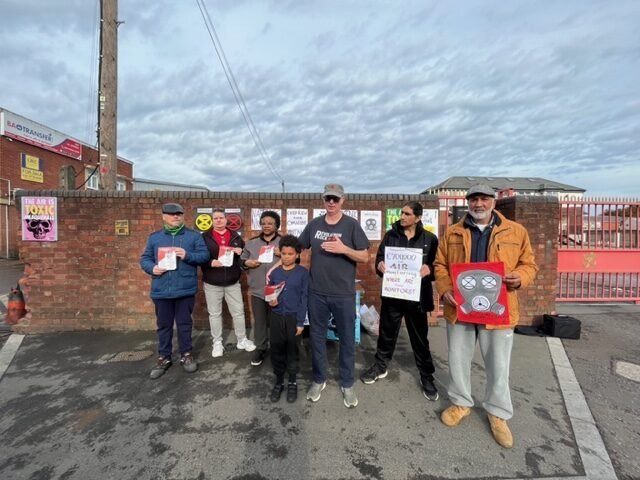
Centric Lab identified this exact mishap when examining Public Health England's (PHE) response to health complaints by Southall residents (predominantly a Black and South Asian descent community). Residents complained that pollution exposure caused by site development work on a former gasworks site was causing respiratory problems and other health effects (14). PHE claimed that it was unlikely there was a toxicological risk to residents' health from exposure to the development work, citing population-level data which suggested no association between the remediation work onset and changes in local asthma or cancer cases. In this case, population-level GP data was used to justify the continuation of site development, overlooking investigating into more susceptible subgroups.
Significantly, this erases community scholarship and lived experience from the decision-making process, which further supports structural racism and poor health outcomes. It also delays environmental justice to very detrimental effects. Every day that we wait for “more evidence” is a day that real people have to live in toxic environments and bear the consequences of this toxicity.
-
The overvaluation of quantitative data, and devaluing of qualitative data lies in part due to our relationship and perception of data. Data is not independent from the human psyche. It is us who chooses what is mined, how it is mined, and crucially how it is interpreted. The over-reliance on quantitative data to support health policy action points to a deeper ontological problem as to how health is currently viewed and treated (15).
As it stands, medical and scientific theory, methods, and practices are dominated by the biomedical, reductionist, and mechanistic view. That is, disease can be attributed to bottom-up causality, where physical changes in isolatable structures at the cellular and molecular level create disease.
Whilst there have been developments to this point of view, such as the biopsychosocial model which posits that top-down causality can also explain disease etiology (e.g. psychological processes inducing changes at the cellular level), this has failed to permeate mainstream practice.
Deep-rooted ontologies of Western medicine and science, those being reductionism and dualism, have shaped scientific norms and practices. This has prioritised the examination of complex health problems by isolating its causal factors (biological, psychological, sociological) into separate, quantifiable means.
There have been calls by Centric Lab and many others for an ecological approach to health science (16, 17). That is, understanding disease from the perspective of the individual as a whole, not as isolatable parts, where physical and psychological processes interact in complex manners to causally produce disease. Qualitative methods and data afford a deeper insight into how an individuals/communities context i.e. social roles, structures and processes, influence health outcomes (18).
Only when health is understood as not occurring in a vacuum, but rather, as being deeply interconnected to an individual's physical, social, political, and economic context, can policy begin to seriously account for qualitative data as a source of evidence for decision-making.
-
There are two ways performative action plays a role in gaslighting and feeding injustice.
Structural racism will always fight to survive, as it is the engine that sustains racial capitalism (19). The relentless survival and adaptation of racism has resulted in the development of nuanced and insidious methods of discrimination (20). One such example, is how structural racism as a system wholeheartedly promotes the ceremonial platforming of racialised Black and Indigenous Peoples. For example, a Black nurse was recently awarded a “prestigious award” on behalf of the thousands of “BAME NHS nurses” who contributed during COVID-19. Whilst we need to recognise the incredible work racialised Black women have done during the pandemic, to do so only through methods of ceremony or performance supports the racist system. Performative actions are not the same as anti-racism, the award does not systematically change her material status (e.g. increase her paycheck, give her more power/autonomy in all aspects of her work environment, provide her and other racialised Black women with personal protective equipment (PPE), provide her with access to specialised healthcare for the PTSD many will suffer due to Covid). In fact, a recent survey by the Royal College of Nursing found “BAME nurses” had reduced access to PPE or training compared to their racialised White counterparts (21). This is not to say that awards or other similar recognitions are intrinsically bad; however, when they stand alone without systemic change they become problematic and performative. These tokenised and performative actions create a distraction from providing marginalised communities with financial structures, tools, and decision-making power that can enact actual structural changes (22, 23).
Performative action also prevents those representing marginalised groups to be seen in the same intellectual light as those from acknowledged institutions, which generally are from racialised White backgrounds (24). For example, asking those campaigning for justice to join an event to share their stories for free, but not giving them the dignity of paid work in a boardroom setting, where they can structurally share valuable insights, knowledge, and solutions is perpetuating the myth that those who are marginalised cannot govern themselves or do not have an equal intellectual prowess. This too contributes to injustice, it slows it down. The quicker those of us working in “practitioner” roles be it as scientists, policy makers, or NGO’s, the quicker we all see change happen.
-
http://ellaroberta.org/attorney-general-moves-to-quash-inquest-of-nine-year-old-girl/
https://academic.oup.com/aje/article-abstract/131/1/185/90895
https://www.medrxiv.org/content/10.1101/2021.01.24.21250397v1.full.pdf
https://www.thenation.com/article/archive/first-environmentalists/
https://friendsoftheearth.uk/climate/justice-and-representation-environment-sector
https://www.aljazeera.com/opinions/2020/1/1/a-voice-from-the-forest-in-the-corporate-boardroom
https://www.eea.europa.eu/publications/environmental_issue_report_2001_22/issue-22-part-05.pdf
https://www.researchgate.net/publication/341834289_Complexity_Reductionism_and_the_Biomedical_Model
https://www.medrxiv.org/content/10.1101/2021.01.24.21250397v1.full.pdf
https://www.sciencedirect.com/science/article/abs/pii/S1047279720302684
https://www.cpre.org.uk/opinions/why-the-environment-movement-needs-to-value-diversity/
CASE STUDIES

-
A Black British girl living in South-East London who passed away in 2013. The coroner stated: "I will conclude that Ella died of asthma, contributed to by exposure to excessive air pollution." Air pollution was cited as a cause of her death, a landmark case (source, source).
NO2 limits that Ella was exposed to on the South Circular road where she lived exceeded WHO and EU air pollution limits.
It took her mother, Rosamund Kissi-Debrah, 12 years of fighting to get a secondary coronary opinion; with the previous assessment in 2013 not attributing any environmental factor as causes of Ella’s death (source).
It also took years for her mother, who had to endure legal battles and proceedings in order for a new inquest into Ella’s death, to be heard in the High Courts (source).
“Ella’s death certificate now reads “acute respiratory failure, asthma, and air pollution exposure.” “/ her admissions to hospital correlated with spikes in air pollution near her home;
Ellas case must not be swept under the rug as another statistic but propelled into the highest echelons of government and societal consciousness to impose responsibility; air pollution must spearhead the health justice movement. Thanks to this landmark case, the Global community has a platform from which to change policies on air pollution and legally stop structural and systemic polluters.
Air pollution is produced by the most privileged populations but disproportionately experienced by the most vulnerable populations (source).
This case shows that Black women must, with little support, endure chronic struggle to lay the foundations of environmental health justice.

-
Early 1980’s in Warren Country, North Carolina, was sparked one of the instances of environmental health justice movement; protests in 1982 in opposition to hazardous waste landfill designated to be placed upon a small African-American community; the protests sparked the mobilisation of communities across the US to combat unfair distribution of hazardous waste treatment, storage and disposal sites amongst vulnerable BIPOC communities (source).

-
Pipelines are known to break and cause devastating damage to water systems, which, in turn, affect the health of people and local biodiversity.
Despite this those in charge of the Dakota Access Pipeline continue to claim that the risk is minimal. From April 2016 to February 2017, Sioux Peoples staged a water protection ceremony to put a stop to the pipeline. They were met with military force, despite the overtly peaceful and ceremonial atmosphere.
To add to the injustice, the Standing Rock Sioux rightly claimed the pipeline broke long standing treaties with the Nation. In this case there was a resolution, however it took Indigenous Peoples enduring violence at all levels; enduring a very cold winter out in the open, water cannons, incarceration, and beatings.
Water is life, and it should never be structurally denied to anyone. Furthermore, it should not take putting Indigenous Peoples at risk of violence for protecting such a fundamental element to planetary survival (source, source2, source3).
RELATED WORK