The Role of Knowledge in Autonomy
by Hannah Yu-Pearson
February 2026
At Centric Lab, we often talk about health autonomy, or health justice being rooted in autonomy. In medical practice, autonomy is often equated with informed decision making of the patient about their own care. We understand the word autonomy to mean self-governance - the conditions, ability and agency to make decisions around one’s health. We understand this ‘self’ to also be plural and relational, autonomy does not mean atomised individuality without care or responsibility. Rather it means people experience health care as dignified, non-coercive, non shameful, and rooted in knowledge and understanding that is inclusive.
It is timely to come back to what these terms mean for us especially. Autonomy, and the discourse around it, is not without its pitfalls and caveats. So why do we need to bring knowledge into the centre of autonomy?
SOME CONTEXT
Late last year The Guardian published its investigation into the Free Birth Society, an influencer account based in the US that promoted free birth (birthing without medical assistance or a midwife present) and health autonomy. Its podcast featured hundreds of women sharing their own stories of empowering, unassisted births; many of them were redemptive births for women who had previously experienced birth trauma from obstetric violence within the medical system (very real in the UK context too). The podcast shared these curated stories of liberation and healing through a radical enactment of autonomy - to be the authority of your own body and to ‘exercise your own choices’ by not outsourcing (any) knowledge or expertise to a system that could harm you.
It has since been revealed that Free Birth Society is a multi million dollar business and a scam that is now linked to countless avoidable baby and mother deaths (instances where women did not seek support in emergencies because of how they were influenced). Largely a result of the business’ algorithm-attuned polarising and dogmatic rhetoric of (individualised) ‘sovereignty at any cost’, creating dependency on a twisted version of autonomy which ensured a steady following and revenue stream to the founders.
There are multiple threads to acknowledge here - this was a business operating in a context where medical care is actually unaffordable, and they worked through social media which necessitated simplistic and extremely dangerous and binary views to stay relevant. On the other hand, parts of their critique of the medical system was not unfounded, what they were highlighting were some of the very real outdated and harmful standardised medical practices within maternity care. They were speaking to the glaring lack of health autonomy in the existing medical system. What was missing, as so often is with social media, is the space for nuanced learning and unlearning.
WHAT THIS MEANS FOR US
Theirs was a story about how the advocacy of autonomous birth became a cult. For us, the need to build autonomous healing pathways remains as pressing as ever, but an autonomy without the dogma, an autonomy where knowledge exchange is ever-present, where context is deeply considered, and where choices are widened and dignified. It is core to what we are building as a People’s Health Lab.
Asking these questions supports our work towards autonomy:
What are the conditions for autonomy to take place? (see Health as Ecological and Pathways to Injustice)
What constitutes the evidence of the ‘evidence base’? (see Data for Health Justice, and Equitably working with Community Expertise)
How do we work as a lab in the knowledge that science itself can be misused to lessen one’s autonomy through gaslighting? (see here - Using Science For Relationality and Justice Building and Why Language Matters)
“As relationships and interdependence evolve, our sources and practices of knowledge expand, decreasing dependence on singular sources of information. This is as true for the patient as it is the healthcare practitioner. The Obesity Justice Programme reflects that autonomy and healing can happen on both sides of the relationship. ”

THE COLLECTIVISM OF AUTONOMY
Autonomy is not a singular, individual pursuit but a collective one. Autonomy does not mean the abandonment of expertise or professional experience to be totally alone in your decision making. In practice, autonomy is relational, developed and exercised within the context of social relationships and interdependence. In the medical setting, informed consent ideally works in the context of grounded communication, humility and a receptiveness to the different ways of knowing and understanding a body, in the context of the places and the systems that we all navigate.
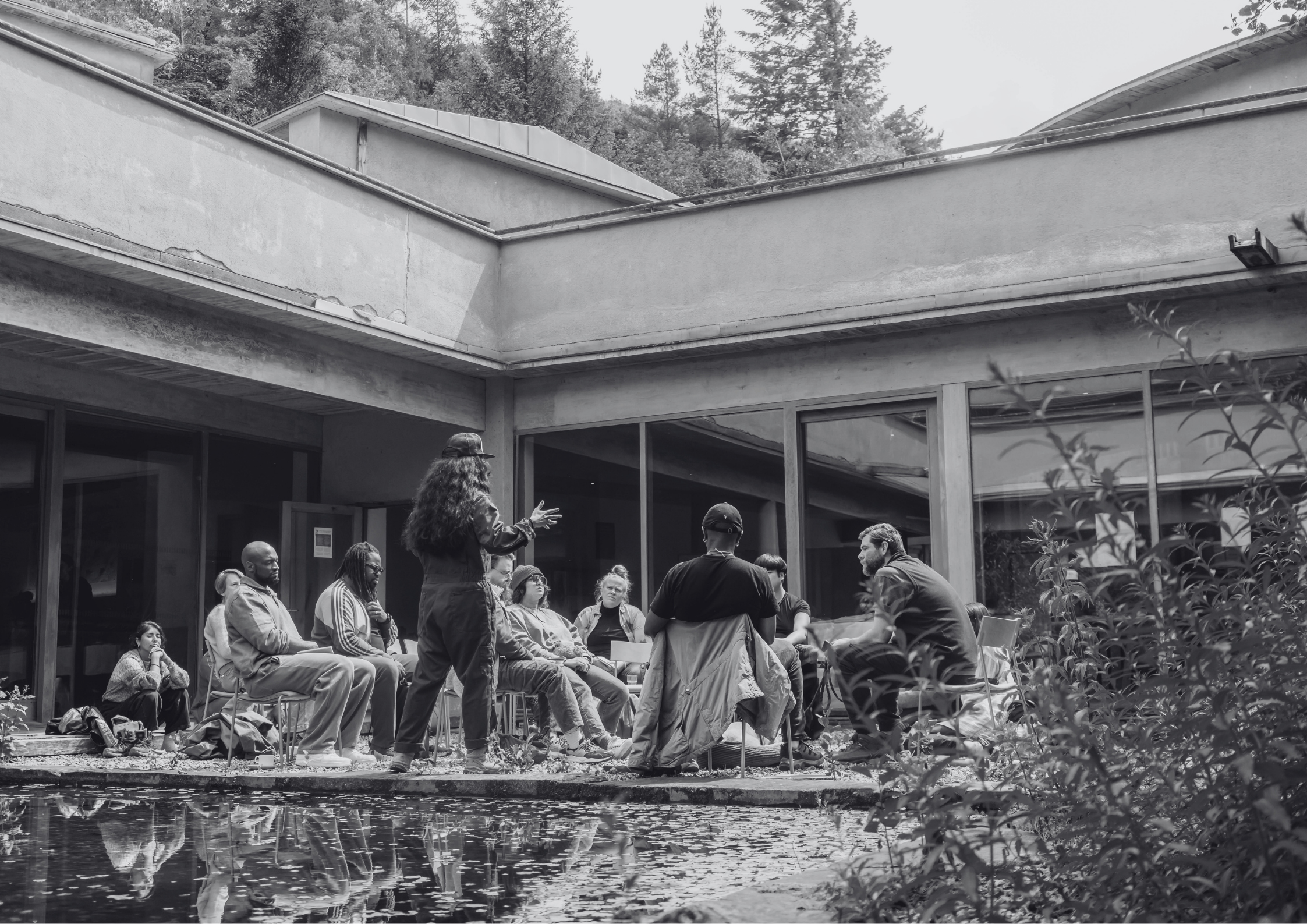
The Obesity Health Justice Programme demonstrated how autonomy can be built collectively through healing circles and the sharing of lived experience in environments of safety and trust. The dissemination of the pamphlet provided practical tools to support people’s navigation of the healthcare system, heightened sense of self, and opened up constructive conversations that helped people feel less isolated, and ultimately offered a practical way for the community to engage with the issues surrounding their health and care. This is an example of how knowledge can build relationships, which then forms the foundation for more shared decision making, more autonomy and ultimately more dignity. All of this by centering and connecting lived experience without discarding science or medicine.
As relationships and interdependence evolve, our sources and practices of knowledge expand, decreasing dependence on singular sources of information. This is as true for the patient as it is the healthcare practitioner. The Obesity Justice Programme reflects that autonomy and healing can happen on both sides of the relationship.
AUTONOMY & KNOWLEDGE
What we have learnt from the Healing Circles is that expanding our practices of knowledge is healing, and this is why continued scholarship is central to autonomy. Continued scholarship allows us to learn, reflect, iterate, change our minds, make different decisions. Doing this collectively means there is an equal exchange of knowledges, that no one position is fixed into dogma, that there is always another perspective.
Part of the growing resistance to and rejection of the medical system has been met with a parallel rejection of science and a rise in anti-intellectualism for fear of exclusion and elitism. And yet we continue to explore how to create epistemic justice and freedom through building tools for more community derived data, knowledge mobility and dissemination.
Practicing and disseminating knowledge contribute to the functioning of autonomy. Knowledge in its most plural sense too - ancestral knowledges, shared experience as knowledge and the witnessing of phenomena that are occurring around you, understanding your own lived experiences of life in your body as data, as evidence. When we treat knowledge in health as more than purely scientific, medical or technical we make way for the healing to be much more too.
Hannah will continue to share notes on her journey as a director of Centric Lab weaving Ecological Justice throughout the Lab’s work. At the moment Hannah is currently working on the Introduction to Ecological Health and Community Health Impact Assessment learning programmes and steering the Polluters Playbook for Air is Kin. You can reach Hannah via email: hannah at thecentriclab dot com
More Writing from Us