
Module 3 - The Determinants of Health

MODULE 3 | SUMMARY
Wrap-Up & DoH Exercise
Thinking in Systems
Thinking about determinants of health can also be considered as thinking in systems and scenarios. It’s a process of evaluating external forces that influence how a policy, project, or plan might bear in reality.
For example, there are many positive benefits to a new housing project, however to state that it has a positive health impact due to increased employment opportunities and the quality of housing is healthier can be a misnomer.
Some points that challenge the idea that housing is inherently healthy ignores issues such as:
In modern building materials there are a number of volatile organic compounds found which can cause inflammatory responses and contain endocrine disruptors;
the quality and quantity of tenure for those that rent is crucial given the psychosocial stress people experience from issues such as fear of eviction and potential homelessness;
and whether the types of homes being made reflect the cultural realities of modern life - such as multi-generational households - leading to potentially adverse household experiences.
Equally, when new employment is a ‘positive indicator’ of population health outcomes it has to be assessed through critical lenses:
What are the conditions of employment, are they fixed contract hours with employee rights or is it through zero-hour contracts that put stress on individuals?
How does the employment contribute to community wealth building?
Does the employment offer substantial skills training?
These factors will more than often relate to broader structural determinants such as the influence of private sector lobbying or policy-led investment in services.
Without these issues being addressed more accurately the promise of a direction of good health can in fact lead to a different set of health problems.
LESSON TASK
Pick 3 policies or projects that you see in the media and do some scenario mapping. This will help embody the learnings in how structural determinants manifest in systems.
We’ve provided a template and an example to help this mapping. Remember, this doesn’t need to be perfect, it’s a way of looking at second and third order effects based on your knowledge about what happens in reality. This knowledge can be your observations as well as from your own lived experiences.
The example we’ve given is looking at what social consequences and potential health impacts there might be on a home retrofit strategy.
WORKSHEETS
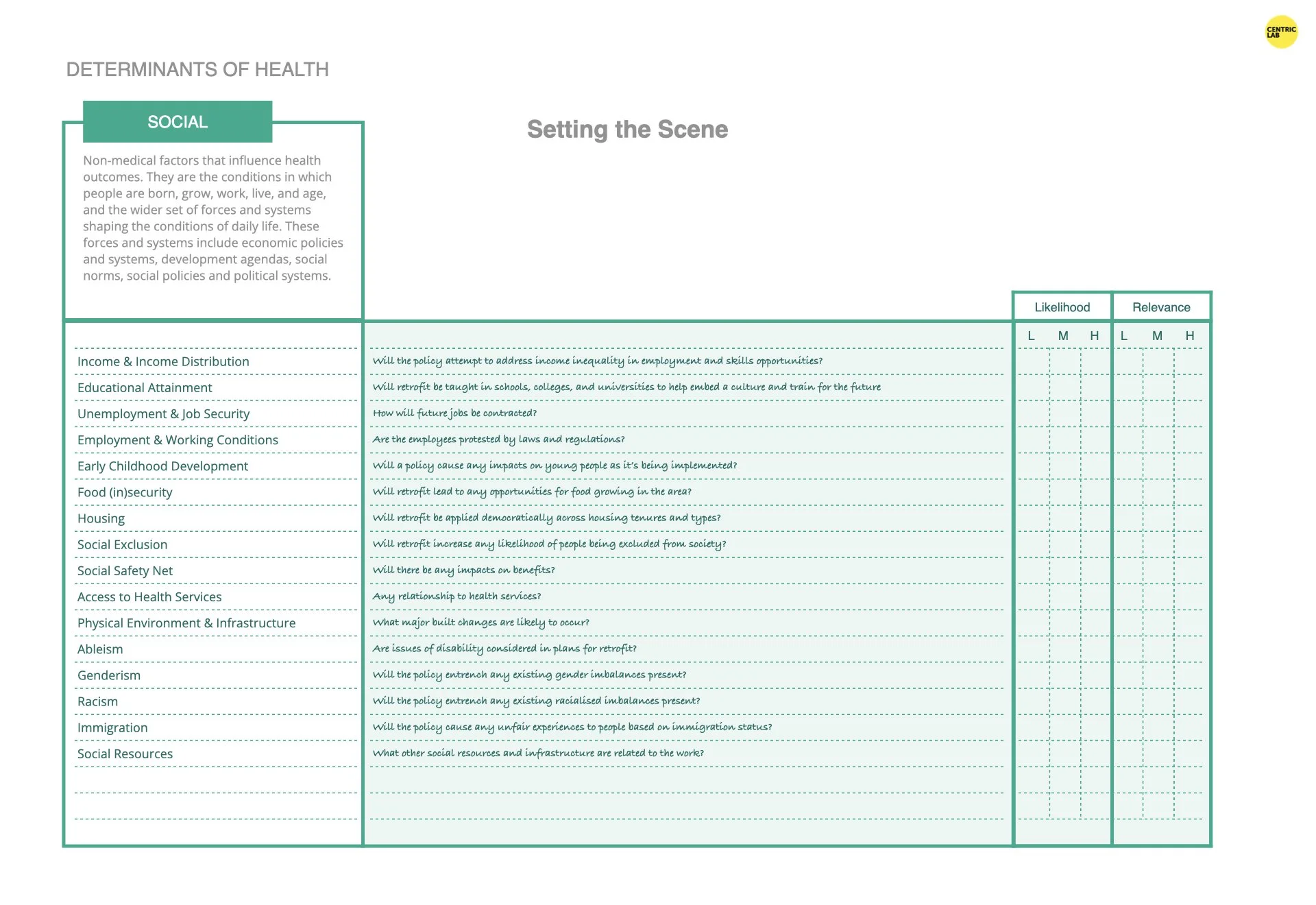
Start with this worksheet. It’s designed as a rapid analysis to help you explore a topic from all angles and determine what merits further exploration based on likelihood and severity ratings.
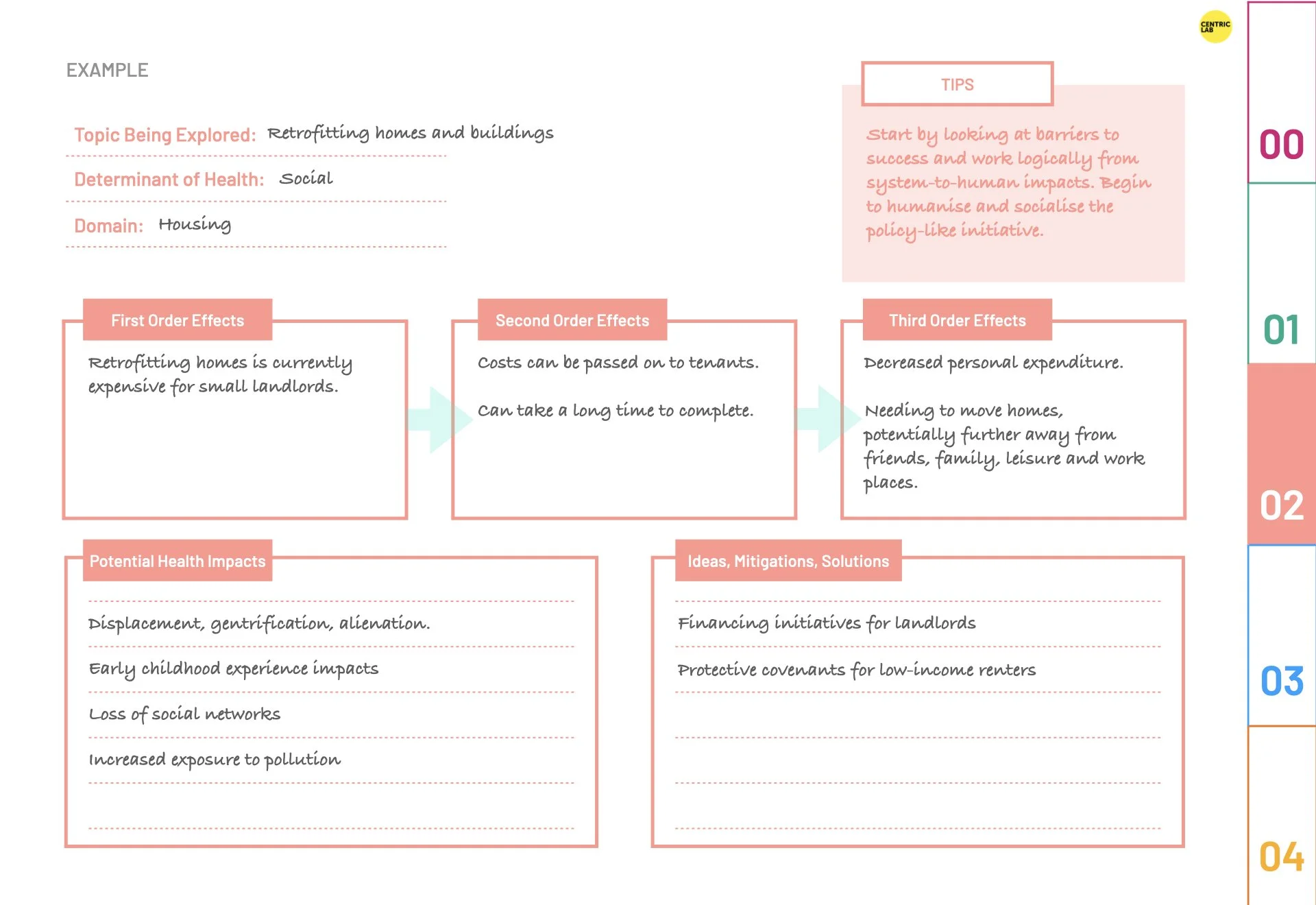
One you’ve identified some factors to explore you can use this worksheet to scenario model situations.