
Module 2 - Pathways to Health Injustice

MODULE 2 | LESSON 3
Structural Violence
INTRODUCTION
In 1969 Johan Galtung proposed a groundbreaking definition of violence. He defined it as “the cause of difference between the potential and actual.”
He goes on to say that violence is present when there are external factors that influence a person’s mental and physical realisations. In more modern terms this is known as “structural violence”
We are extending this theory to what people experience when living in poverty. Poverty stands between the potential and actual. For example, a study from the University of California Davis points out that impoverished urban neighbourhoods impose daily challenges that create an environment where a person is in constant physiological and mental stress. In turn this can severely undermine a person’s wellbeing, regardless of their vulnerabilities.
Applying Galtung's definition, we can therefore clearly understand that poverty is a type of violence, specifically, structural violence. Even from the traditional definition of trauma, which includes experiencing serious injury, poverty injures the human body at a mental and physical level.
This framework sets the path for studying how the experience of poverty is as a form of violence and thus a traumatic experience. In turn, this creates the case to help directly link post traumatic stress disorder (PTSD) to poverty.
Learning Points
-
Individuals living in impoverished environments will also often display behaviours that fall under the behavioural constellation of deprivation (BCD), a range of poor health choices e.g. increased smoking, drinking and illicit drug use.
Researchers argue that these behaviours are contextually appropriate responses, as psychologically, an impoverished environment results in a lowered sense of personal control - particularly over one’s risk of mortality which pushes individuals to partake in immediately gratifying, physiologically and mentally harmful behaviours.
-
Health inequities are systematic differences in health outcomes that are driven by structural inequities. Structural inequities, such as poor housing, no access to green spaces, high levels of environmental pollutants, poor transport, poor access to healthcare, poor access to nourishment etc. cause systematic disadvantages for marginalised and discriminated groups leading to inequitable experiences of the social determinants of health, in turn, leading to health inequities (source).
Health inequities, in turn, reinforce structural inequities because health inequities have secondary effects that further nourish the root causes of health inequities. This is a reinforcing feedback loop, a vicious cycle that we need to break. Practitioners must prioritise individual, community, and population health.
Racialised and marginalised groups of the population are disproportionately affected by poverty, which is directly tied to inadequate habitats. Income and wealth are determinants of health, and poverty has been identified as one of the causes of ill health. However, poverty causing ill health is only one part of the association. The other part is ill health causing poverty. (source)
All aspects of our society are currently organised through a capitalist lens, therefore, access to financial resources is associated with access to health services and health-promoting resources (source). Income poverty, therefore, is associated with poor health outcomes. Those experiencing financial hardship are disproportionately affected by communicable diseases, mortality, and malnutrition. Being ill, in turn, means that an individual may only be able to work a reduced number of hours, may need to change jobs, or may not be able to work at all. Ill health leads to economic loss, and economic loss may mean that the individual cannot afford accessing health services, living in a clean neighbourhood, or buying nourishing food. This, in turn, will deteriorate the individual’s health even more, and the vicious cycle continues.
-
In psychology, trauma can be defined as the reaction to a deeply distressing or disturbing experience. In medicine, trauma is defined as a physical injury.
Common examples of trauma experiences include physical and sexual abuse, verbal or emotional abuse, childhood neglect, intimate partner violence, accidents or disasters, illness, incarceration etc. Further, there are several ways in which these traumatic events are experienced (source, source). These include the direct experience of single (acute trauma) or multiple (repetitive trauma) traumatic events either as an adult or as a child (developmental trauma). Further, trauma can be experienced through close individuals (vicarious), particular groups or populations (historical trauma, collective trauma) as well as generations (intergenerational trauma).
Trauma also creates systemic biological and cellular changes. For example, it can change our gut bacteria environment, which has implications for obesity (source). In cases of acute trauma, some can experience PTSD, which creates neurobiological abnormalities which alters the function of various biological systems, this too has implications for obesity (source).
Trauma and Hyper-vigilance
The cumulative experience of discrimination can lead to a life that is filled with trauma, and it can also lead to specific acute experiences of violence, which is a form of trauma (source). One of the consequences of trauma is the feeling that we need to be in constant alert in our socialisations and physical environments. Most of our trauma is rooted in the social dynamics dictated by supremacy structures. Whether it is gender-based violence, such as femicide, or the constant emotional and physical abuse of Trans and racialised Peoples (source) (source) (source).
Hyper-vigilance can also lead to specific poor health pathways. Hyper-vigilance, or a heightened awareness and anticipation of protecting oneself against additional trauma, is a key feature of post-traumatic stress disorders (source) and is one of the proposed pathways through which trauma leads to poor cardiovascular and metabolic health, substance abuse (source), and sleep disturbances (source). Anticipatory stress and vigilance, or the impact of anticipating a discriminatory experience, are also examined in discrimination research. In a review of racial discrimination, vigilance was also positively associated with sleep disturbances, high blood pressure, waist circumference, and depression (source).
Systemic Trauma & Structural Violence
Norwegian sociologist, Johan Gultang, introduced the term structural violence in the 1960s to describe the outputs of racism, classism, sexism, and other marginalisations (source). He defined structural violence as an “avoidable impairment of fundamental human needs” (source).
In this we can see that the city and urban experience can be a force of structural violence. Due to conscious decisions, structural forces such as laws, policies, regulations, and practices can coalesce to create a trauma on biological systems.
-
Structural violence in the case of the built environment is a prolonged series of violent events which can prevent people from meeting their basic needs and also can result in traumatic experiences for people living in those environments. Given that PTSD can only be diagnosed a month after trauma, it can make causally or correlationally associating PTSD to structural violence challenging. It also makes it particularly difficult diagnosing C-PTSD for those continuously living in impoverished deprived areas.
Research indicates that PTSD generally develops a month after acute trauma exposure. However, in some cases, namely with C-PTSD, it can take several months or even years before symptoms present themselves. Risk factors associated with the development or chronicity of PTSD have been identified through systematic reviews, with one review indicating several pre and post-traumatic factors, though it is still difficult to draw conclusions about any causal effects. Factors of interest include being of low education, low socio-economic status and high life stress, hallmarks of the human experience within impoverished environments.
Thus, unstable environmental conditions be it through homelessness or chronic poverty, may predispose and maintain PTSD-related symptomatology.
More research needs to be done to understand if the experience of poverty itself has a causal role in the development of PTSD, specifically, if we are to see poverty as a form of structural violence, which is trauma. However, what is clear, is that there are higher rates undiagnosed PTSD among low socioeconomic and urban dwelling communities.
The experience of poverty is a type of violence, therefore it makes sense to look at poverty as trauma resulting from structural violence, which makes a person vulnerable to developing PTSD. Given, that structural violence is disproportionately experienced by people living in impoverished environments, PTSD rates in those communities will potentially be higher. If this is the case, we can provide evidence that the experience of poverty has long lasting biological consequences.
Furthermore, PTSD can be used as a proxy to understand how healthy a community’s relationship with the built environment they inhabit.
Finally, it creates a sense of urgency for improving the living conditions and wider built environment of economically vulnerable people.
There could be 3 different questions to consider that could address the relationship between PTSD and poverty.
Can a person develop PTSD due to experiencing accumulative psychological stressors (discrimination, societal rejection, injustice) of life and living in an impoverished environment? Or is it the case that living in such an environment increases the chances of being exposed to an acute traumatic experience which is why more individuals in such environments experience PTSD?
In the context of poverty, how does PTSD onset occur and how do the symptoms manifest when the trauma is long term and sustained?
As poverty can prevent access to resources such as healthcare, nutritious food, exercise, safety, as well as increase exposure to several environmental stressors, can these compiled factors make a person more susceptible to PTSD in the event of an acute traumatic experience?
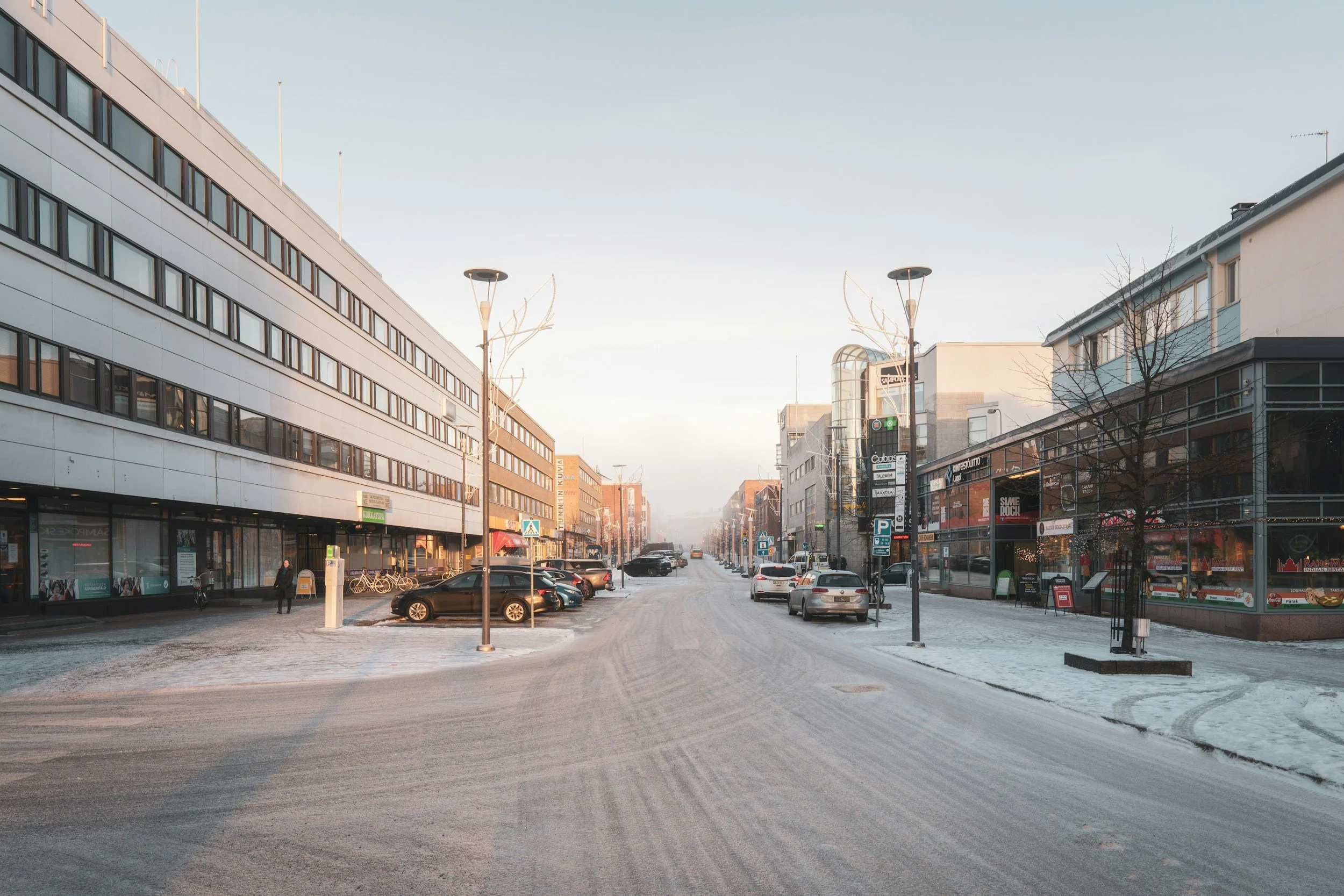
“Hyper-vigilance, or a heightened awareness and anticipation of protecting oneself against additional trauma, is a key feature of post-traumatic stress disorders and is one of the proposed pathways through which trauma leads to poor cardiovascular and metabolic health, substance abuse, and sleep disturbances.”
KEY LEARNINGS
Health inequities, in turn, reinforce structural inequities because health inequities have secondary effects that further nourish the root causes of health inequities. This is a reinforcing feedback loop, a vicious cycle that we need to break.
Trauma also creates systemic biological and cellular changes. For example, it can change our gut bacteria environment, which has implications for obesity. In cases of acute trauma, some can experience PTSD, which creates neurobiological abnormalities which alters the function of various biological systems, this too has implications for obesity.
Impoverished urban neighbourhoods impose daily challenges that create an environment where a person is in constant physiological and mental stress. In turn this can severely undermine a person’s wellbeing, regardless of their vulnerabilities.
CONSIDERATIONS AND REFLECTIVE QUESTIONS
Are local health and social care services addressing the issues of the local environment in the mental health of people they are caring for?
How might you apply a trauma-informed approach to your work? (n.b. this will likely be a task for further reading)