
Module 2 - Pathways to Health Injustice
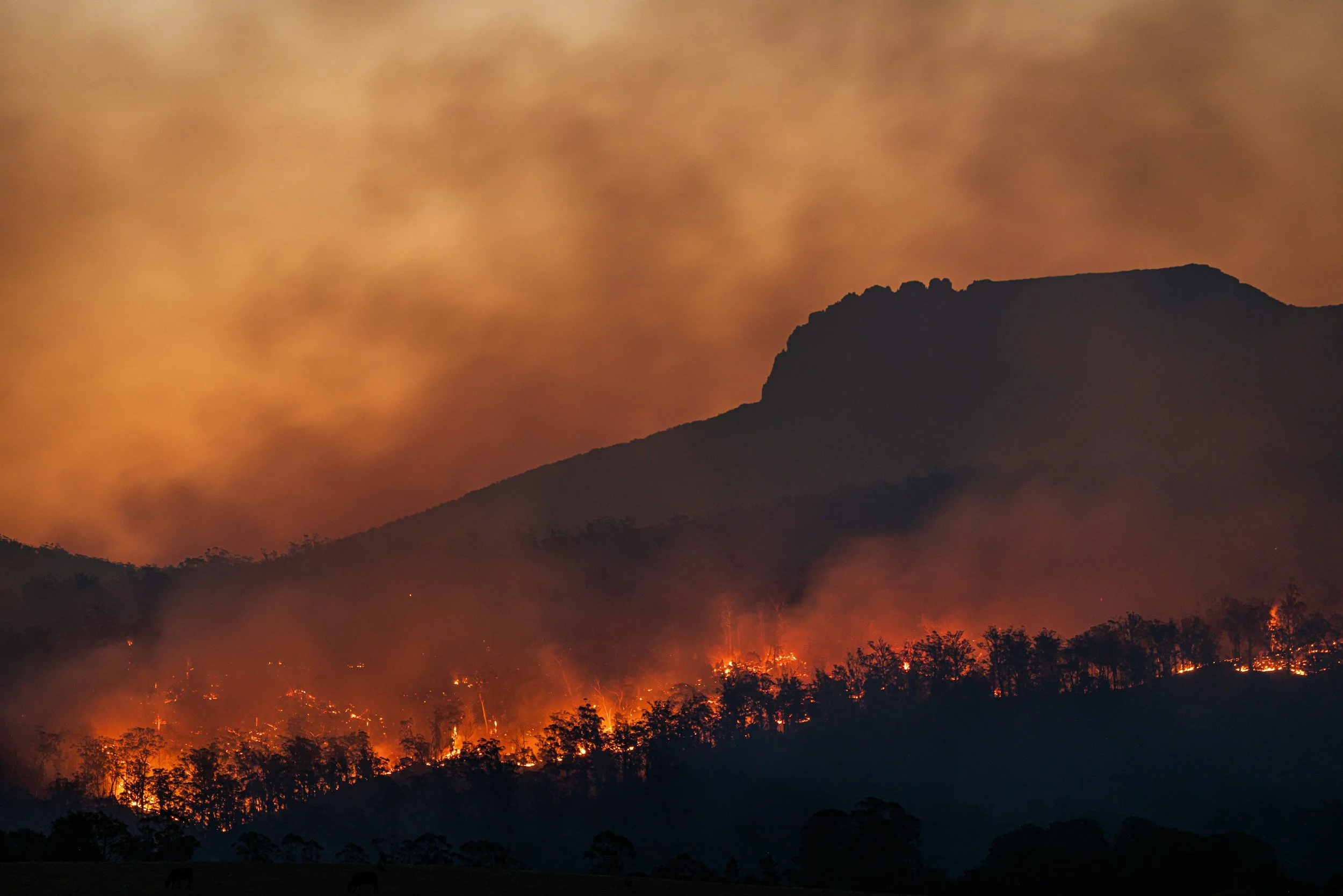
MODULE 2 | LESSON 6
The Planetary Dysregulation
INTRODUCTION
The term ‘climate change’ whilst now firmly established in our lexicon still fails to be mentally accessible due to its ambiguity.
Firstly, we do not experience climate on a micro or daily levied abscess, we experience weather.
Secondly, change gives no tangible parameters or a comprehensible time frame.
Thirdly, climate change is an output or an outcome of the deliberate corruption of the varied and multiple planetary systems by industry (source).
Only articulating the phenomena based on outputs does little to orientate our attention and cognitive abilities toward the inputs, which contribute to the output or problem.
Identifying and understanding the root factors that contribute to a problem is crucial to establishing long lasting and accurate solutions.
To do this we must start by identifying, naming and defining the problem more accurately. In this report we are using the term “planetary dysregulation”, which is being defined as the impaired ability of planetary systems to maintain and the processes required for self-regulation, particularly due to unsustainable exploitation of ecosystems and chronic exposure to industrial contamination.
Learning Points
-
The first factor to explore is how culture, specifically, epistemology that is rooted in white supremacy has played a role in setting the cognitive pathways for accepting a disconnected relationship with Nature as a universal norm. The world, due to colonialism, has been under its dominance for so long that it feels like an unmovable fact. For example, the idea of humans being the only entities with the capacity for complex thought has been promoted for a long time by western influenced science (source).
This has created an artificial supremacy that places humans above all other beings and it wrongly erases the wisdoms, intellect, and thinking processes of non-human beings (source). It also contributes to the disconnection with Nature as it puts humans above them.
Recently, however, scientists have been acknowledging that beings such as trees have intelligence and they engage in various thought processes (source, source). In contrast, many Indigenous Peoples who have always perceived the potential of non-human teachers have framed wisdom and intellect as an all being ability (source). This perception helps build our kindredness, reverence, and connection with Nature.
-
The second factor to consider is the contamination of our Creators; The Soil, The Water, and The Air. They are our Creators due to the fundamental role in the healing, sustenance, and flourishing of all life on Earth. Before discussing the contamination of our Creators, we first must understand their contributions to our planet.
SOIL
Soil is a living ecosystem and community composed of organic matter, minerals, gases, liquids, and organisms that together support, heal, and produce Life. It’s the home of myriad microbes that decompose organic matter, fix nitrogen, and facilitate plant communication. It is also home to a plethora of larger critters, each playing an integral role in the ecosystem; soil provides plants with an anchorage to grow, and stores the nutrients and carbon; it filters rainwater and regulates discharges (source), (source).
WATER
Water is a living ecosystem that is Sacred as it sustains all Life on Earth. “Water is Life” and “Water is within us”. They consist of minerals, microbes, vegetation, insects, chemicals, and various other beings. (source)
AIR
Air is an element and complex ecosystem which consists of a planetarily unique mixture of chemicals and microbes.They are within us with every breath, making them essential to all Life on Earth (source). Air protects us from harmful cosmic radiation, and its makeup is essential for the development of complex organisms through supporting respiration and photosynthesis (source).
-
The next factor to consider is the disruption of microbial communities. Microbes have a fundamental role to play in our ecosystems. This is not to say that it’s a purely ‘bottom up’ affair, whereby less-complex organisms always have an upwards influence on more complex organisms in the ecosystem. Indeed, a mishmash of upward and downward causation is likely at play in our ecosystems. In essence, our actions affect microbial communities and entire environments, and these microbes and environments affect our actions.
It’s all connected! However, human activity in recent centuries has led to unprecedented pressure on the fundamental elements of the ecosystems (e.g., the soil and its microbial denizens), leading to ecosystem degradation, which in turn is dysregulating our planetary systems (source).
We can think about our ecosystems in the context of Earth operating as a single, complex, adaptive system. Earth can be viewed as a system that is influenced by diverse interactions between energy, matter and the organisms that reside in the planet’s ecosystems.
This is collectively termed the ‘biosphere’. Indigenous Peoples have recognised important aspects of planetary systems for millennia. However, western scientific disciplines have typically examined the components of the planet in isolation, taking a ‘reductionist’ approach. This has led to a growing disconnection with nature and has inhibited the recognition of the interrelatedness between the constituent parts of the planetary system.
But how do ecosystems and their constituent parts fit into the ‘planetary system’ realm and sustain equilibrium and regulation of this system?
Let’s use forest ecosystems as an example. Forests can have a significant influence on the hydrological and carbon cycles, and in doing so, influence, and are part of, the planetary system (source). Forest ecosystems support biodiversity and make up a considerable portion of the biosphere.
Deforestation contributes to global climate change, as does the burning of trees that once lived millions of years ago (i.e., fossil fuels) (source). Therefore, the influence of trees on the stability of the planetary system cannot be overstated. And ultimately, as the famous saying goes, “everything is connected to everything else”.
As we remove forests and other land habitats, we also degrade the soil. The soil provides a foundation to the rest of the ecosystem; the soil and its microbial communities support and nourish the plants, which in turn, support and nourish the animals (source).
At each of these levels, microbes play an integral role in the health and behaviour of all organisms–they’re not simply ‘decomposers’ as traditional energy pyramids imply.
Going even further, a tree cannot exist without Soil, and topsoil can take around 1,000 years to produce three centimetres (source). We are currently losing topsoil at an unprecedented pace worldwide due to industrial and capitalist practices degrading the Land. The degradation of soil and its microbial communities is a key driver of planetary dysregulation via the loss of ecosystem integrity (source)
-
Like other animals (and plants), we can view the human body as a holobiont—a host plus trillions of microbes working symbiotically to form a functioning ecological unit (source). Indeed, we can think of ourselves as “walking ecosystems” within ecosystems.
We can also view the rest of the nature surrounding us as a vast assemblage of holobionts that are interconnected biologically and evolutionarily (source).
Each human being emits a million biological particles every single hour from their body, sharing the invisible constituents (the microbes) of our human holobiont with all the other holobionts (the plants and animals) whilst they share their invisible constituents with us (source).
We must recognise this deep interconnectedness. Arguably, the natural step to follow this recognition is to “promote beneficial relationships between the constituents of the whole. The whole being the planet, and the constituents being our environments, our societies, our ‘selves’, our microbes, and our genes” (source).
By doing so, we can foster mutually-advantageous relationships to benefit both the health of our human bodies and our surrounding ecosystems with their bountiful-but-dwindling biodiversity.
This is what planetary health is all about: recognising the deep interconnections between the rest of the ecosystems on the planet and human health and how they affect each other. As mentioned, Indigenous Peoples have long recognised this deep interrelatedness, knowing not to separate the human body and the health of our “walking ecosystems” from the rest of the environment.
As Finnish Immunologist Tari Haahtela once said, “we are protected by two nested layers of biodiversity” (source). This is in reference to the microbial denizens that live in the plants, air, water, and soil (the first nested layer), and the microbes in and on our bodies (the second nested layer).
The microbes in our bodies are colonised by the microbes from the environment and they keep us healthy by digesting our foods, providing us with health-promoting chemicals, regulating inflammation, and training our immune systems (source).
Therefore, continuing our detrimental actions towards the external ecosystems and the planetary systems can affect the quality of our habitat (including the microbial communities and our exposure to them), and in turn, the regulation of our health and wellbeing.
-
“In addition to being warmer, poorer neighborhoods lacked critical resources in their physical and social environments to help them cope with extreme heat” (source)
“Those living in areas of high deprivation show a greater vulnerability, which is especially pronounced amongst the racialised residents within marginalised neighbourhoods.” (source)
“Deprived coastal communities still experience significant inequalities for high and medium likelihood of flooding. These inequalities within coastal communities are more pronounced than in inland ones.” (source)
“Whether it’s flooding from severe weather events like hurricanes or it’s something like this severe cold, the history of our response to disasters is that these communities are hit first and have to suffer the longest.” (source)

“Planetary dysregulation is being defined as the impaired ability of planetary systems to maintain and the processes required for self-regulation, particularly due to unsustainable exploitation of ecosystems and chronic exposure to industrial contamination.”
BONUS CONTENT
Check out this audio series produced in 2023 by the Centric Lab team all about the Planetary Dysregulation. Episode 1 is featured here, but there are 3 more.
KEY LEARNINGS
The role of knowledge shaping and making cannot be ignored in getting to the root of the planet's dysregulated systems. Epistemology that is rooted in white supremacy has played a role in setting the cognitive pathways for accepting a disconnected relationship with Nature as a universal norm.
Microbes play an integral role in the health and behaviour of all organisms–they’re not simply ‘decomposers’ as traditional energy pyramids imply. We are currently losing topsoil at an unprecedented pace worldwide due to industrial and capitalist practices degrading the Land. The degradation of soil and its microbial communities is a key driver of planetary dysregulation via the loss of ecosystem integrity.
It is always the working class communities who experience the greatest disadvantages of the planet's dysregulating systems through inadequate infrastructure that's unable to respond to change.
CONSIDERATIONS AND REFLECTIVE QUESTIONS
Who does it benefit to constantly refer to the output of a phenomena (climate change) rather than address the inputs (contamination and pollution).
What underpins the ability for contamination and pollution?
Who is responsible for restoring planetary systems? Where are they and are there enough of them?