
Module 1 - Ecological Health
MODULE 1 | LESSON 3
Understanding Community Health
INTRODUCTION
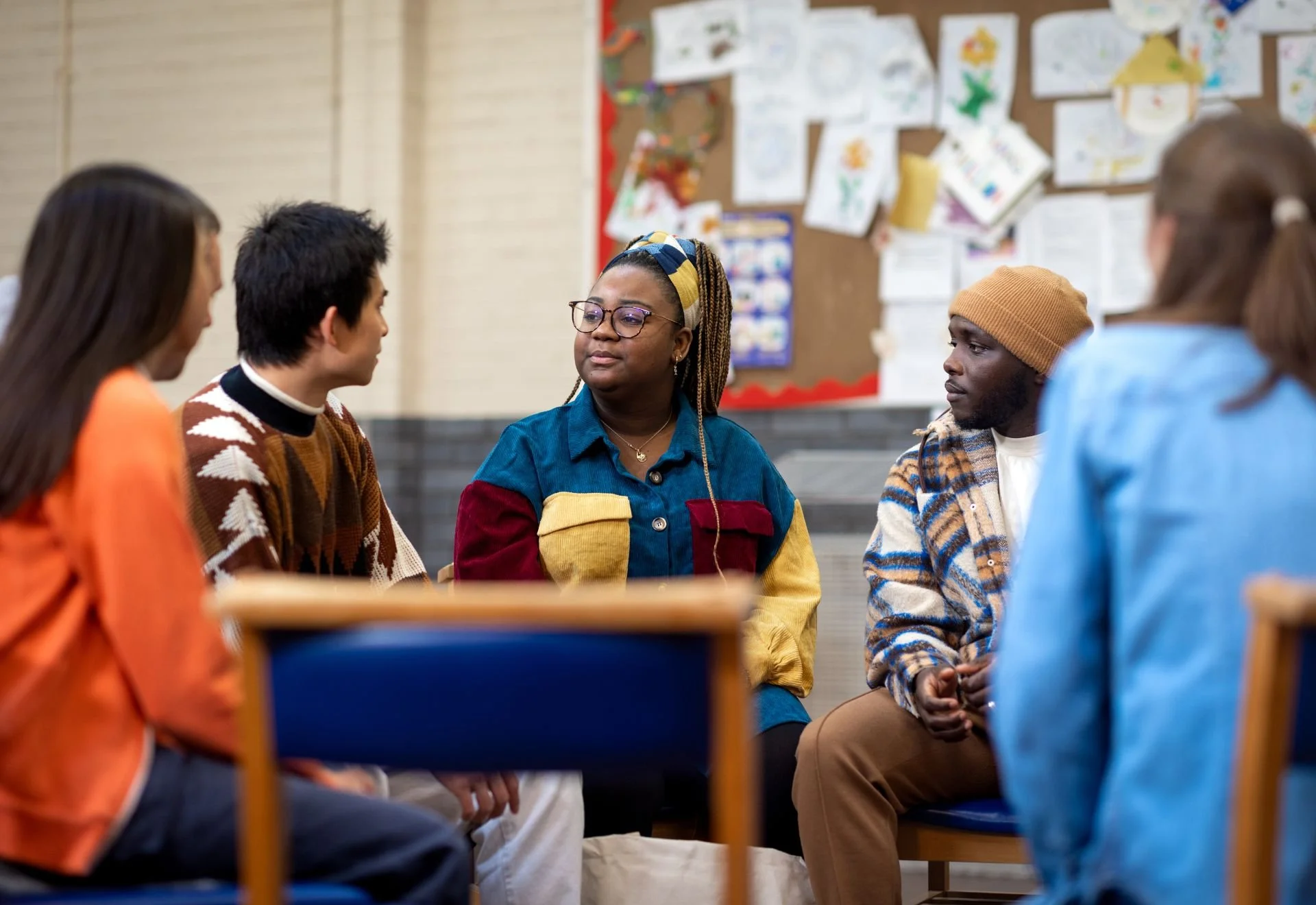
In the context of ecological health, a community may be a group of people living in the same area who are affected by a health hazard.
Community health as a field has historically been anchored in innovative public health methods and programmes ‘directed at reducing risk factor prevalence, decreasing acute and chronic disease burden and injury occurrence, and promoting health’ (source). Earlier efforts to define community health have been developed through academic-centered sources that do not reflect the importance of community engagement in community health. Community health without community engagement leads to methods and programmes that happen to communities, not with, by, or for them.
Community is at the core of justice movements, we cannot create justice alone. Communities create an environment where knowledge, tools, and evidence can gather and disseminate quickly and effectively. They also offer psychological support as the road to justice is long and at times exhausting (source).
Centric Lab have 3 working definitions to cover the term ‘community’:
Local: meaning a group of people within a specific geographical area;
Organised: meaning a group of people within a relative geographical area representing collective interests for the betterment of the geographical area;
Identity Oriented: meaning a group, or groups, of people who have defined, and protected, characteristics such as gender identities, racial(ised) identities, and class identities.
Learning Points
-
In research, scientists often work with averages to describe a given phenomenon. These averages are useful to grasp and communicate large amounts of data. However, depending on the distribution of the data, some observations may be very different from the average. For example, on average, a community may be described as ‘healthy’. However, not all individuals of the community have the same health. Some have better health; some have poorer health.
Similarly, average air pollution levels in an area may be below a given official threshold. However, some individuals living in the area are exposed to more air pollution than others. This is problematic at different levels.
First, one may have individual data on an outcome (e.g., health) and aggregate data on an exposure (e.g., air pollution). If one investigates the link between outcome and exposure, their results will likely be biased because of so-called exposure misclassification (source), leading to false conclusions about the relationship between outcome and exposure.
Second, one may base policy and planning decisions on (biased or unbiased) averages, neglecting that these averages do not apply to all individuals. For example, the WHO has established ‘safe’ levels of air pollution which are often used to justify policy and planning decisions. However, first of all, even if the average level of air pollution is below a threshold, at times, air pollution levels can be much higher. Second of all, even if a given level of air pollution is considered ‘safe’, it may not at all be safe for individuals who are more vulnerable due to existing health conditions, exposure to air pollution in other places, or accumulated exposure to a range of stressors. This is very much related to the so-called Ecological Fallacy which describes that relationships between variables at an aggregate level imply the same relationships at the individual level (source).
Considering people’s lived experience would allow for the collection of individual data and, therefore, mitigate the many limitations associated with averages and aggregated data.
-
The Cambridge Dictionary defines ‘experience’ as 1. (the process of getting) knowledge or skill from doing, seeing, or feeling things, 2. something that happens to you that affects how you feel, and 3. the way that something happens and how it makes you feel.
The Merriam-Webster dictionary defines ‘experience’ as 1. direct observation of or participation in events as a basis of knowledge, 2. practical knowledge, skill, or practice derived from direct observation of or participation in events or in a particular activity, 3. something personally encountered, undergone, or lived through, 4. the conscious events that make up an individual life, and 5. the act or process of directly perceiving events or reality.
These definitions of ‘experience’ suggest that experience is a) individual, b) direct, and c) associated with knowledge and/or feelings about the matter at hand. Of course, what exactly is meant by ‘experience’ depends on the context. The added prefix ‘lived’ emphasises that ‘lived experience’ describes an individual’s direct, first-hand experience of a phenomenon by having lived through it. One could argue that ‘experience’ already captures that individual, direct, first-hand element of ‘lived experience’. However, the important difference between ‘lived experience’ and ‘practitioner experience’ becomes evident in the contexts of science and policy where phenomena are investigated and decisions are made by people who do not have ‘lived’ experience of a phenomenon. For example, a researcher may have experience with and knowledge about mental health disorders from studying them. However, this is very different from having ‘lived’ experience of a mental health disorder. An individual’s ‘lived experience’ adds an important perspective and can therefore help to understand and/or explain a given phenomenon.
Based on the above elaboration and on previous attempts to define ‘lived experience’ (source, source, source) we offer the following definition: Lived experience is an individual’s direct, first-hand experience from living through a specific phenomenon. This, of course, is a rather brief and generic definition. However, we argue that it is necessary to keep the definition generic in order to be inclusive of the many different forms that lived experience can take. Nevertheless, we want to point out the main elements of lived experience (LE) that make it so valuable for public health research:
LE is direct, first-hand experience; it is authentic (source)
LE is associated with knowledge, insights, and understanding of a phenomena in a specific place and through the passing of time (source)
LE is individual; however, LE can also be shared/typical (source)
LE can be documented and observed through a variety of methods
LE has no age limit; children to adults should be taken into consideration
LE should be inclusive of marginalised communities.
Statistics and data are a crude manner to measure experience; therefore, they can only be one element that is used to observe and understand the effects of pollutants on health.
The other part is listening to observations and stories of people living in areas of environmental injustice.
-
The knowledge, insights, and understanding gained by living through something—the lived expertise—can never be replaced by the knowledge, insights, and understanding gained from working with or from studying something.
Questions that a person’s lived experience can become expertise on matters of pollution can be:
How a person senses the pollutant?
How does the pollutant affect their living conditions?
What are the psychosocial stressors from experiencing the pollutant?
What are the symptoms a person associates with the pollutant?
What are the daily changes the pollutant creates in a person’s routine?
How does the pollutant affect a person’s community and neighbourhood?
How does the pollutant affect a person’s perception of their neighbourhood and community?
How does the pollutant affect existing health conditions ?
How does the pollutant affect their interaction with others?
How does the pollutant affect their self care routines; rest, exercise, sleep, family time?
How does the pollutant evolve day by the day?
Using these questions in both data collection and analysis methods ensures that any use of large data collection exercises are understood in human contexts. Therefore, preventing the risk of inaccurate decision making that leads to health outcomes.
-
The origin of the English word “Healing” comes from the Old English word “haelen” which means “to make whole”. Here, “whole” means a state that is complete, unbroken, or uninterrupted. Additionally, “healing” is in a verb format which, meaning it is an action, which requires a process. Therefore, the first part of a working definition for “Healing” is that it is “a continuous and uninterrupted process that sustains wholeness”.
It is important to note that ‘healing’ is not static but dynamic: as we move through life wholeness also moves, evolves, and changes. It also moves with the injuries or traumas we face. For example, if we experience an accident, we move towards another state of wholeness rather than moving back to our original state. We also recognise that it is not about reaching a state of perfection, which is not possible or ethical. All of us will find our own feelings and states of wholeness depending on our culture, life, experience, and growth. Therefore, it can encompass a variety of elements. For example, in a study looking to find the meaning of healing, respondents “described wholeness of personhood as involving physical, emotional, intellectual, social, and spiritual aspects of human experience”.
Elephant & Castle (London) resident Angela Camacho sees that “healing is complex and can come in many ways…. Even a market or building can provide healing”.
With this we see the importance of physical infrastructure as a pathway to healing.
The Biological Mechanics of Healing
Neuroscience is the study of the nervous system which expands from the brain to the spinal cord. As a result, neuroscience is able to observe how our biological systems interact with each other and with the places we live, and therefore help us understand the different parts of the healing process.
The healing process can involve two pathways: restorative and adaptive.
From an adaptive perspective, our body uses various systems, such as the hypothalamic-pituitary-adrenal axis (HPA-Axis) to observe changes in the environment in order to make adaptive changes within our bodies. For example, during a heatwave, our body will sense the change in temperature and through the communication between HPA-Axis, respiratory, and cardiovascular systems our body will go through a wide range of changes to adapt to the heat: we change our breathing rhythm, our heart starts to pump faster to move oxygen through all of our tissues, and, of course, we start to sweat to begin the cooling process.
The body also has a great ability to constantly restore, aiding the healing process. Each and every time, we take a deep breath, through practises like meditation, yoga, or walking, our vagus nerve engages. The vagus nerve is long, running from the brain to the colon, meaning it's involved in the function of immune, endocrine, digestive, and cardiovascular systems. It is significant that we can engage it so easily and constantly as it creates an anti-inflammatory response, which helps restore vital organ function and lower the risk of disease. Both through adaptation and restorative processes, we are able to come back to a whole on a daily and constant basis.
There is a final factor to consider and that is the role that rich biodiversity plays in our healing. In the example of taking a deep breath, we are inhaling oxygen, which needs to be nourishing in order to sustain the process of healing. Nourishing air is generated by trees, fungi, microbiome, vegetation, wind, and water working together. In the further sections, we will highlight all the various ways in which our healing is linked to biodiversity. Our healing process is directly linked to the healing process of our planetary systems; therefore, returning to a whole is not just about us, it is about the entire planet.
Therefore the second part to a definition of healing is that “the process is entwined with the world around us.”
-
An umbrella term that brings together methods of practice for organisations and scientific researchers to establish equitable engagement with communities. Every community has the right to conserve governance over their Knowledges and Practices that determine their health and wellbeing.

“Considering people’s lived experience would allow for the collection of individual data and, therefore, mitigate the many limitations associated with averages and aggregated data.”
BONUS CONTENT
Check out this audio conversation produced in 2021 with Professor Ilan Kelman on Equitable Engagement with Community Expertise.
KEY LEARNINGS
A community is a complex ecosystem of people and should be understood in its own dynamics and accurate language used. Community health must be analysed and disseminated with community consent, iteration, and collaboration.
Innovative research methodology is the foundation of how lived experience is reflected in community health research. The ‘Interpretive phenomenology’ method is a widely accepted lens to hold other methodologies and methods accountable to lived experience, such as when researchers combined IP methodology with community-based participatory research (CBPR) collection to generate insights into the effect of chronic disease stigma and shame (source).
Each and every individual’s lived experience is valid. Taking the lived experience and expertise of all the individuals of a community allows for the identification of patterns but also adds important nuances to our understanding of a given phenomenon. The ‘outsider’ cannot come, observe, and leave, to then claim they have an oversight of the situation and an understanding of the problem. This is not an equitable approach to engaging with communities and community expertise.
QUESTIONS TO ASK YOURSELF
What could ‘just good enough data’ look like for your community?
Write down the elements you think reflect what makes your community healthy. For example, you may find that access to social infrastructure and childcare are the things that impact the daily lives of your community. If you want, you can put three headings of ‘built’, ‘economic’, and ‘social’ to help organise your thinking.
Start a small mapping exercise of writing down a health outcome and consider the various ways that a person with that condition might feel, or become, healthy. This may not be about curing a person but more about their daily experiences, mental health, and wellbeing.