
Module 1 - Ecological Health
MODULE 1 | LESSON 6
Community Health Organising
INTRODUCTION
Taking the learnings of lessons 1-5 back into your community.
Since health is more than our individual behaviours and a result of complex factors and the biological interactions with the environment around us, much of the knowledge, data and expertise is to be found there too, within the communities that occupy these spaces. This lesson is to give space to explore lesson 4 in your community and shape what health might mean to you collectively.
How to gather your community to discuss community and ecological health?
The topic of health touches on experiences that are likely to be difficult and painful to talk about, it is where the injustices and harms done in society are manifest in people’s physical and mental health, therefore it is important that you and your group take care in the process.
There are two main strategies to meaningfully connect and find a foundation for health in the community. Firstly, it is to create an accessible sharing environment of trust and care that minimises the re-traumatising impact of sharing or living within a certain level of awareness of your conditions. And secondly is to totally expand how health may be understood and reframe the entry points that will allow you to reach the same goal.
Learning Points
-
Consider how you are understanding your community, who is being represented, and whose voices are you unable to reach and why that may be. The barriers to engagement may be very practical - distance, time and childcare, or may be more intangible - excessively technical language, the feeling of not belonging, not being of value, not being relatable.
In organising a meeting think of the following:
What space are you using to hold the gathering? Is it easily reachable?
Is it at a time of day that parents of young children would require childcare to attend?
Does the meeting overlap with a mealtime, can you provide a hot meal?
Am I using easily understandable language in my engagement efforts?
Am I making people feel welcomed and valued in the space?
Part of creating an environment conducive to getting to the heart of what health means to the community and building outwards means ensuring certain conditions are met. These are 6 principles of trauma informed facilitating that ensure in the process of engaging you are providing choice and dignity to all involved. This is also a form of accessibility, not only bringing people together in a room, but also, where you can, making people feel more able to access the material and topic.
Choice - have I affirmed that people only need to share what feels okay for them?
Trustworthiness - am I being transparent about the purposes and process of this discussion?
Safety - am I creating a sharing environment that is by invitation only and that people can opt out of answering without consequence?
Collaboration - does it feel like we are moving towards a shared goal? Do I feel comfortable to also share answers to the questions as examples?
Empowerment - have I affirmed the value of what people are sharing? How much are participants able to design the process, topics and questions with me?
Cultural consideration - am I open to people sharing experiences in words and ways that depart from the language I have set, and can we reach a shared understanding?
-
Health is a vast topic yet some people may have very narrow understandings of what health means to them when we only focus on the word ‘health’, it could simply mean to them the absence of sickness. Health touches on much more, and without putting words or concepts into people’s minds, it is helpful to begin by understanding what makes them feel well.
When discussing what makes people feel well (and therefore healthy), they could end up talking about everything but illness. They may touch upon their material conditions, having enough money, enough food and secure, comfortable housing. They may focus on the environments and conditions that are conducive to wellness. They may speak to the connectivity they have to friends and family and allude to their social relationships. They could share about the agency they have in their lives to live on their own terms. Or they may even share about the spaces they have to experience faith, purpose or creativity. In these responses you will find that people are circling around things that profoundly impact people’s sense of health and wellbeing, much of which is shaped by decisions made around the built environment. Starting with a conversation about health and the built environment would not take you there.
It is advised to approach these topics slowly, to begin with open ended questions that give the group space to set their own terrain, and then to gently expand into different possible areas. Beginning with questions surrounding how violence and injustice impacts health is not advised.
When thinking about your questions, consider the following question prompts as ideas to kick off:
What makes you feel well? When do you feel most at ease?
What keeps you up at night?
Do you have space to feel and be creative?
What does healing mean to you?
Have you ever felt fatigued after a long day in an urban environment? - round of did you knows.
And then start to explore these questions in different contexts or scenarios where you live, or around an issue you are facing, such as air pollution or proposed housing demolition.
In this first round you are likely looking for the community to share their understanding of what good health means to them, to what extent they connect their wellbeing to their living and working conditions, and in what contexts and settings people can experience relative healthiness and connectivity.
Once this has been established you can begin to set parameters for what your group investigation will be if you take it further and the shape it will take.
-
Manage your time well so that you leave enough time to close up the conversation. It is important that when someone in your group shares something vulnerable or difficult, that they will continue living with once the gathering is over, feels heard and received. Rushing to go home after someone has shared without a chance for the share to land will not be conducive to a sustained and meaningful connection around health.
Try to make the experience of gathering as healthful as possible, and encourage people to take time and space to themselves before resuming their everyday activities. This space should not be extractive where you ‘find out’ about your community to complete a task, nor should it be a therapeutic space for the community.
It is advised that you manage expectations around you and the process, that people take responsibility for their own boundaries, and only share what they feel comfortable with. This might mean someone not sharing personal anecdotes, but instead what they observe as patterns across their life.
More information on ethics and safeguarding considerations can be found in the Air is Kin Academy safeguarding section.
As a facilitator, you are there to rally people in tough moments, and to focus on ensuring people are heard whilst holding and moving people together to a shared goal. Go into the meeting knowing the power you do have collectively, and how best to harness this. Affirm the expertise and wisdom arising from the group, and keep on task. Prepare materials that you can share with those that have shared specific issues that are outside of the collective remit - GP, Food Bank, Crisis warmlines, etc.
-
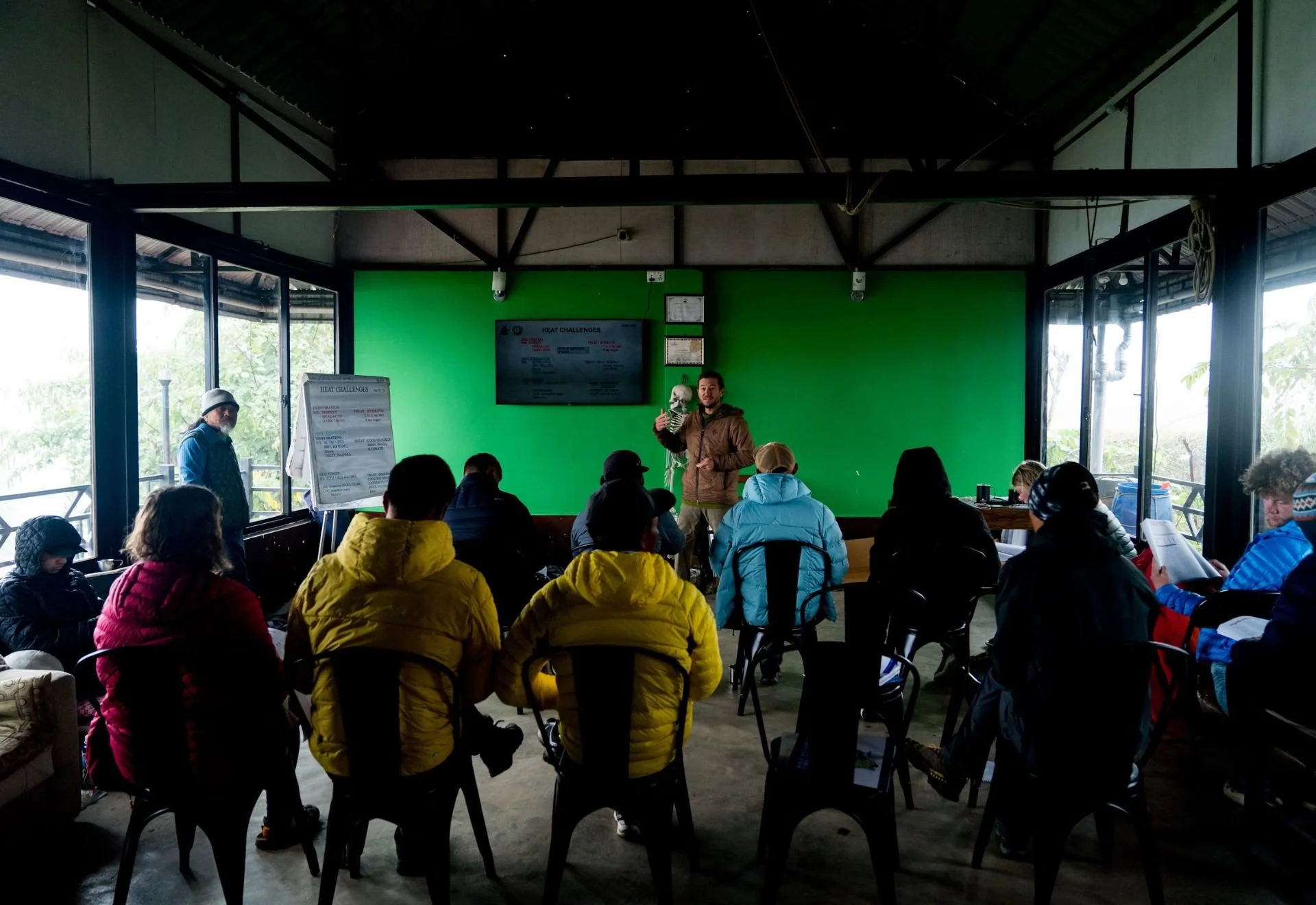
Examples of what this session could look like:
Walkshop format, walking around the neighbourhood identifying experiences and sensations shaped by the environment
Community meal and casual discussion with prompts laid out (you could have assigned notetakers or record and transcribe the conversation - you must gain consent from all involved if you are to record)
Workshop format, large sheets of paper and pens/paper with community members writing and drawing in response to prompts
Virtual session with prompts sent out in advance, with community collectively reflecting
Ensure that there is at least a loose agenda for your meeting so that you and the participants are aware of the direction of travel and the objectives of the session and how that time will be spent. Encourage the group to focus on the smallest actions you can collectively take in the short term, and gauge commitment and energy for a longer term strategy.
For some groups this has been in a Community Health Charter, or a set of visual notes documents capturing their meeting.
KEY LEARNINGS
Create an accessible sharing environment of trust and care that minimises the re-traumatising impact of sharing or living within a certain level of awareness of your conditions.
Move beyond fixed assumptions around how health is defined to better capture community health.
Be ready and responsive to support the community in rooting into small and immediate actions that can be taken so people leave the process feeling connected and motivated.
Ensure the process is nourishing and enriching for yourself and the community so that you are more willing and committed to the longer journey, e.g. use budget to provide hot drinks, snacks or meals so that people are taken care of in the process.
QUESTIONS TO ASK YOURSELF
Am I, and is the group, open to the knowledge, data and wisdom that exists within us? Are we committed to being creative in how we get to know and capture it?
What skills are present in the community that we can utilise in this process to make it as participative and creative as possible? Is anyone an illustrator, cook, parent, dancer, etc?
Are we oriented towards using this process to get to know each other deeper, and to practice solidarity with one another?
Am I best placed to facilitate this? Is there anyone I can buddy up with or share the workshop facilitation to?